

Focus Group Discussions
Beacon’s Focus Group Discussion services help organisations uncover the motivations, perceptions, attitudes, and experiences that shape customer, employee, and stakeholder behaviour. Through carefully facilitated discussions, we explore the underlying reasons behind decisions, preferences, and sentiments that may not be apparent through surveys alone.
Supported by dedicated facilities, experienced moderators, and extensive research expertise, we create an environment where participants feel comfortable sharing honest opinions and meaningful perspectives.

Whether evaluating customer experiences, testing new concepts, exploring brand perceptions, assessing public sentiment, or gathering employee feedback, our focus groups provide valuable context and a deeper understanding that complement quantitative findings.
The result is clearer decision-making, stronger stakeholder alignment, and strategies that are grounded in a genuine understanding of the people you seek to serve.
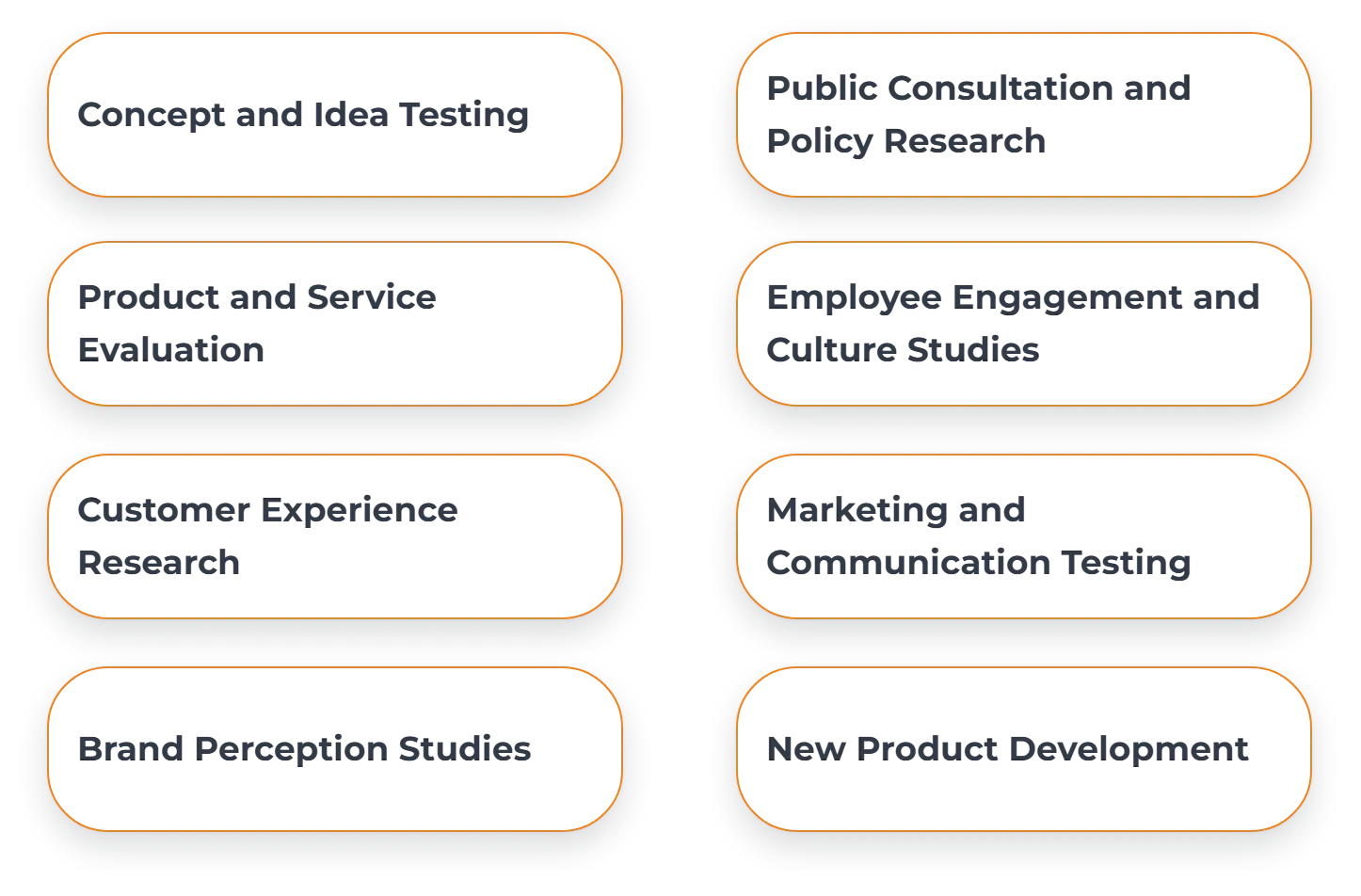
Common Applications
Understanding Consumer Disclosure Behaviours in the Age of Artificial Intelligence
The Challenge
Our client sought to better understand how individuals interact with emerging artificial intelligence platforms such as ChatGPT, Gemini, Perplexity, and other conversational AI applications. Specifically, the organisation wanted to determine the extent to which users were disclosing personal and sensitive information during their interactions, and whether they understood the privacy, security, and data usage implications associated with these platforms.
Given the rapid adoption of AI technologies, the client recognised the need to gain deeper insights into user awareness, behaviours, perceptions, and expectations relating to personal data protection.
Our Approach
Beacon conducted a series of focus group discussions involving participants from diverse demographic and user segments. Through guided discussions, we explored participants’ usage patterns, understanding of privacy safeguards, perceptions of risk, trust in AI platforms, and the factors influencing their willingness to disclose personal information.
The discussions provided valuable qualitative insights into how users interpreted privacy notices, the assumptions they made about data security, and the extent to which they understood how information shared with AI applications might be stored, processed, or utilised.
Outcome
The research revealed several important gaps between user perceptions and actual understanding of privacy and security considerations when using AI-powered applications. The findings highlighted opportunities to strengthen transparency, improve user awareness, and enhance the effectiveness of disclosures relating to data usage and protection.
Based on Beacon’s research findings and recommendations, adjustments were made to the disclosure requirements and communication approaches adopted within the applications. These enhancements helped provide users with clearer information regarding privacy, security, and data-sharing practices, supporting more informed decision-making and responsible use of AI technologies.
The project demonstrated the value of qualitative research in uncovering the human factors, assumptions, and behaviours that often influence technology adoption and digital trust.

Start Your Research Journey With Us