

BEACON EYE-TRACKING TOOL (BETT) ANALYSIS
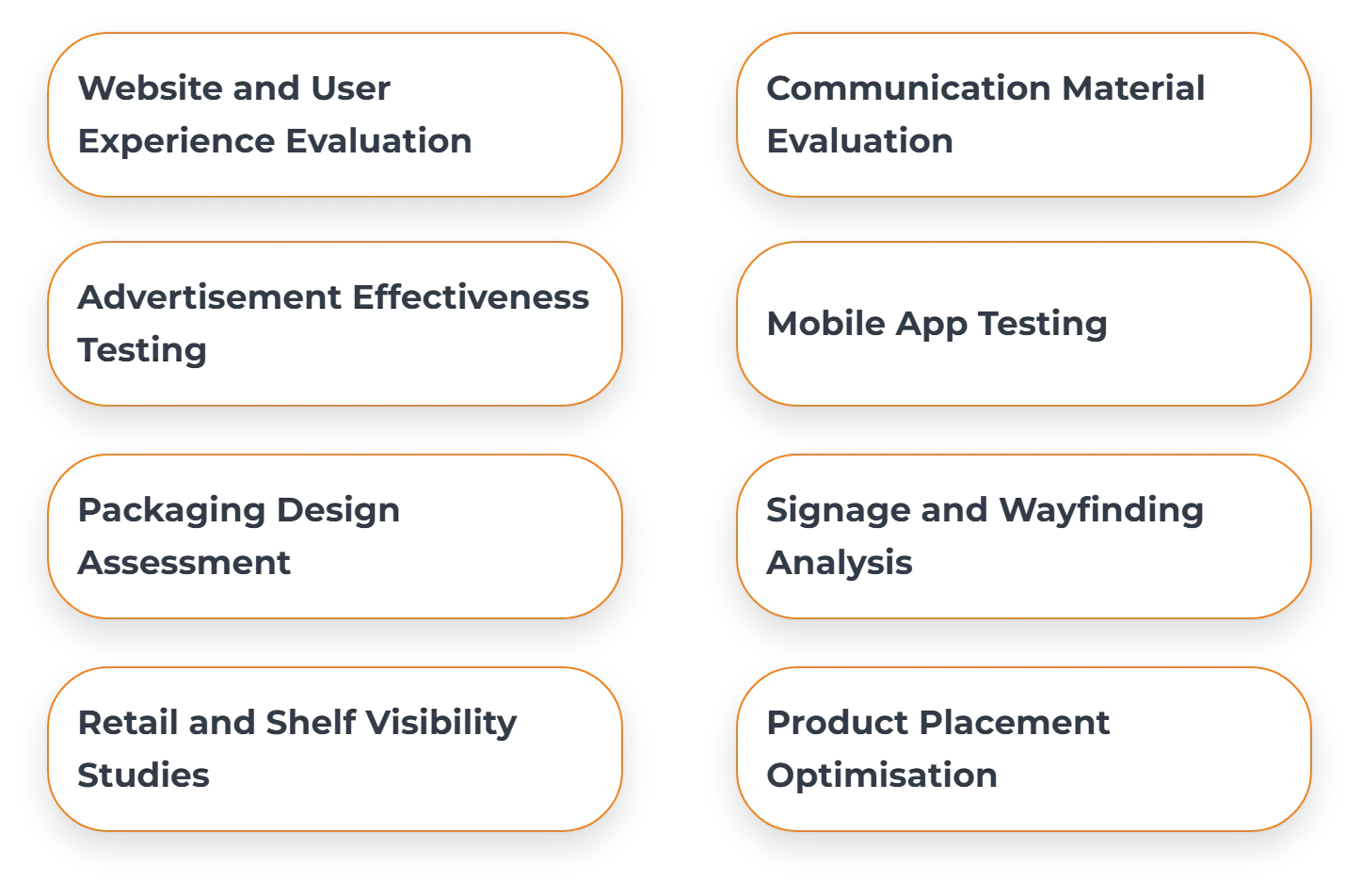
Beacon’s Eye-Tracking Tool (BETT) Analysis provides objective, scientific insights into how individuals visually engage with advertisements, websites, digital interfaces, product packaging, retail environments, and communication materials. By tracking eye movements and visual attention patterns, BETT reveals what attracts attention, what gets overlooked, and how visual elements influence perception and decision-making.

Beyond visual analytics, Beacon translates eye-tracking data into practical recommendations that improve communication effectiveness, user experience, and design performance. The result is a deeper understanding of audience behaviour and greater confidence in the decisions that shape customer engagement.
Common Applications
Ensuring Critical Information Gets Seen
The Challenge
Our client was preparing to launch a major public communication campaign designed to raise awareness of an important initiative. Significant resources had been invested in developing the campaign materials, including posters, digital advertisements, and informational content.
While stakeholders were confident that the key messages were prominently displayed, there was concern about whether members of the public would actually notice and absorb the intended information. The organisation wanted objective evidence to validate the effectiveness of the communication materials before proceeding with full-scale deployment.
Our Approach
Beacon deployed its proprietary Eye-Tracking Tool (BETT) to evaluate how respondents visually interacted with the campaign materials. Participants were exposed to the communication assets while BETT tracked their visual attention, fixation patterns, viewing duration, and navigation pathways.
The analysis examined which elements attracted immediate attention, which messages were overlooked, and whether respondents naturally focused on the most important information intended by the campaign designers.
Outcome
The eye-tracking results revealed a significant gap between stakeholder assumptions and actual viewer behaviour. While respondents were drawn to several visual elements within the materials, many failed to notice critical messages and calls-to-action that the organisation had intended to highlight.
Using BETT insights, Beacon provided recommendations to improve visual hierarchy, optimise content placement, and strengthen the prominence of key messages. The communication materials were subsequently redesigned to better align with natural viewing patterns and audience attention behaviours.
The result was a more effective communication campaign that significantly improved message visibility, comprehension, and audience engagement. More importantly, the organisation was able to make evidence-based design decisions rather than relying on assumptions about what people were seeing.

Start Your Research Journey With Us